Small Swap, Big Statement: Using Switch Covers to Give Your Home a Personality Upgrade
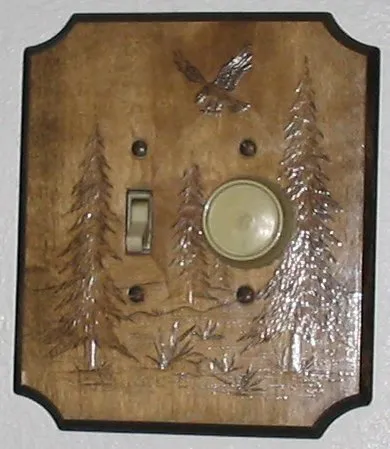
Photo: No machine-readable author provided. Dbenbenn assumed (based on copyright claims)., CC BY 2.5, via Wikimedia Commons
Most people treat switch covers like background noise. They're there, they work, they get wiped down occasionally — and that's about it. But if you've ever walked into a room that just felt right without being able to put your finger on why, there's a decent chance the details were doing the heavy lifting. And switch covers? They're one of those details.
Here's the thing: you don't need to gut your kitchen or repaint every room to make your home feel like it has a real point of view. Sometimes all it takes is swapping out a few flat, builder-grade plates for something that actually says something.
Why Switch Covers Punch Above Their Weight
Interior designers talk a lot about "finishing the room." What they mean is that every intentional space has layers — the big stuff like furniture and paint, the mid-level stuff like rugs and lighting, and then the micro-details that tie it all together. Switch covers live in that last category, and that's exactly what makes them so powerful.
Because they're small, they don't overwhelm. Because they're everywhere — living room, hallway, kitchen, bedroom — a consistent or intentional choice across your switch plates creates a subtle visual rhythm that makes a space feel curated rather than accidental. And because they're relatively inexpensive, you can afford to be bold in a way that might feel risky with a $1,200 sofa.
A hammered brass cover in a kitchen with gold hardware? That's cohesion. A hand-painted ceramic plate in a bathroom with vintage tile? That's personality. A matte black cover with a clean edge in a modern home office? That's a statement without a single word.
Going Bold Without Going Overboard
The fear most people have with statement switch covers is that they'll look like they tried too hard. And look, that's a fair concern — nobody wants their outlet plate to be the thing guests are silently judging. But the trick is context.
Bold doesn't have to mean loud. A deeply textured cover in a neutral color — think linen-look or concrete-finish — adds visual interest without competing with anything else in the room. Patterned covers work best when they echo something already present: a geometric plate alongside a patterned throw pillow, a floral motif in a room with botanical prints. You're not introducing a new idea; you're reinforcing one that's already there.
One practical rule of thumb: if you're going to use a truly eye-catching cover — something with a bold pattern, an unusual material, or a distinctive finish — let it be the only one in the room doing that work. One statement plate on a feature wall, surrounded by more understated covers elsewhere, reads as intentional. Six competing statement plates in the same space reads as chaos.
Open-Concept Spaces: The Bridge Problem
Open-concept floor plans are everywhere in American homes right now, and they come with a specific design challenge: how do you define different zones — kitchen, dining, living — without walls to help you out? Furniture arrangement and lighting do a lot of the work, but switch covers are a surprisingly useful tool here too.
Using a consistent switch plate finish throughout the open area (say, brushed nickel) creates visual unity. But you can also use subtle variation to signal zone transitions. A slightly warmer tone in the dining area, a cooler or more industrial finish near the kitchen — it's a micro-level cue that tells the eye "this is a different space" without any physical separation. Designers use this trick constantly, and it costs almost nothing to pull off.
Renters, This One's for You
If you're renting, you've probably made peace with the fact that the walls are beige and the cabinet hardware is generic and there's nothing you can do about it. But switch covers? Those come off with a screwdriver and go back on just as easily. You can swap them out on move-in day and swap them back before you hand over your keys.
That means renters have access to the same design upgrade as homeowners — they just need to keep the originals in a ziplock bag somewhere. A set of patterned or textured covers can do an enormous amount to make a rental feel like your space rather than a temporary pit stop. It's one of the few truly reversible upgrades that actually makes a visual difference.
Apartment dwellers in particular have reported that swapping out standard white covers for something with a little warmth — aged bronze, warm wood-look finishes, or even hand-painted ceramic options — made their space feel dramatically more lived-in and personal, even without changing anything else.
Real-World Examples Worth Stealing
Need some inspiration? Here's how real homeowners are using switch covers to make a point:
-
The maximalist living room: A homeowner with a deeply layered, eclectic living room — lots of pattern, lots of texture, collected-over-time energy — used ornate Victorian-style switch plates throughout the space. Far from looking like an afterthought, the plates became part of the visual story.
-
The minimalist bedroom: A couple going for a serene, spa-like bedroom swapped standard white plates for matte white covers with a subtle raised edge. Same color, completely different feel — more intentional, more finished.
-
The personality kitchen: A small apartment kitchen with limited room for decor used hand-painted ceramic switch covers as a way to bring in color and artisan character without taking up any counter space. The plates became conversation starters.
-
The transitional home: A house caught between its traditional bones and its owners' more modern tastes used brushed nickel covers throughout as a neutral bridge — modern enough to feel fresh, restrained enough not to clash with original architectural details.
Where to Start If You're Not Sure
If you're new to thinking about switch covers as a design element, start with one room. Pick the space where you spend the most time or the one that currently feels the most unfinished. Look at the existing finishes — hardware, lighting fixtures, faucets if it's a bathroom or kitchen — and find a cover that echoes one of those tones.
From there, it's just a screwdriver and about ten minutes. No demo, no drywall dust, no contractor scheduling. Just a small swap that, more often than not, makes you look at the room differently.
That's the quiet power of the right switch cover. It doesn't announce itself. It just makes everything around it look more like it was meant to be there.